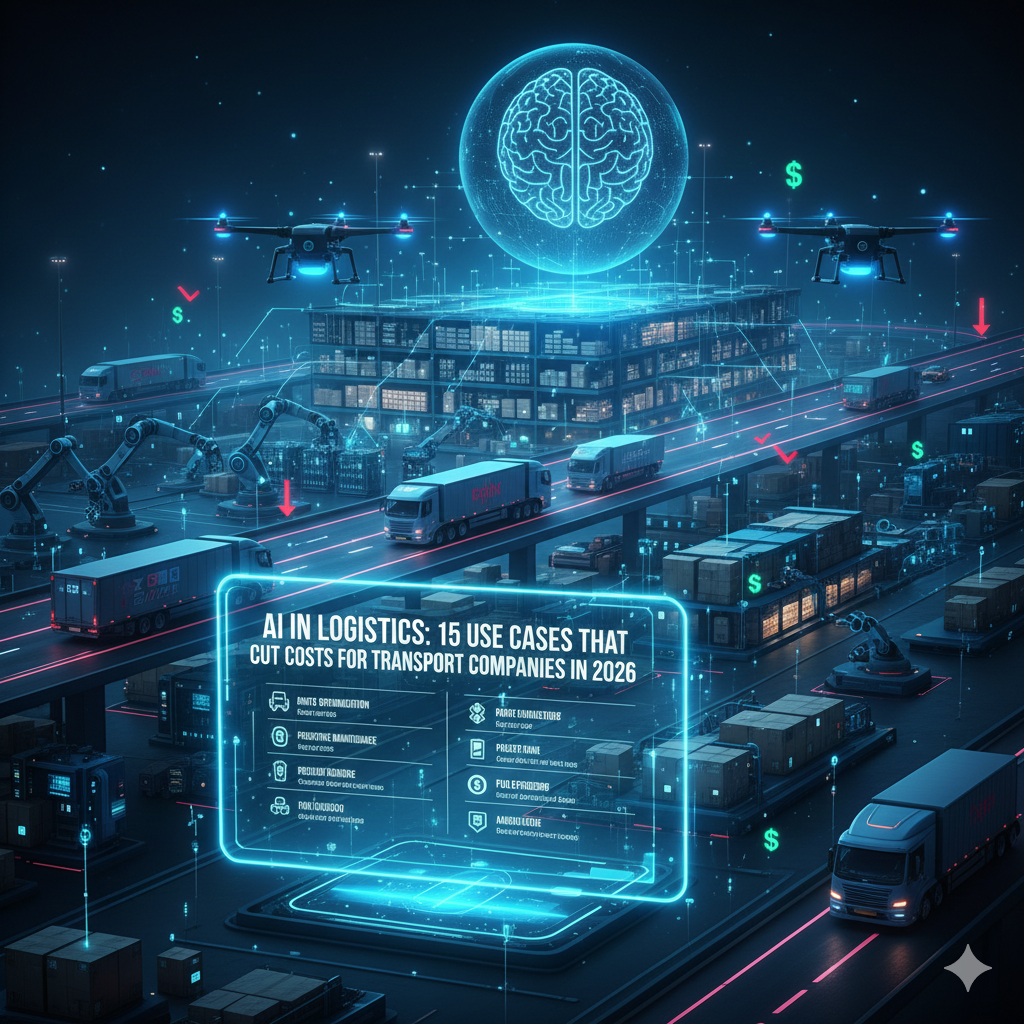
The logistics industry is undergoing one of the biggest transformations in history. With rising fuel costs, complex supply chains, increasing customer expectations, and pressure for faster delivery, AI has become a necessity, not an option.
In 2026, leading transport companies in Saudi Arabia, the UAE, the USA, and Europe are using AI to:
- Reduce operational costs
- Improve delivery speed
- Optimize fleets
- Predict disruptions
- Increase warehouse efficiency
- Provide real-time visibility
- Reduce manual work
This guide breaks down 15 powerful AI use cases that logistics companies are adopting right now — along with real-world examples and impact.
Let’s dive in.
🚛 1. AI Route Optimisation
AI analyses traffic, weather, driver patterns, fuel prices, and historical routes to suggest the fastest and cheapest route.
ROI:
- 10–25% reduction in fuel cost
- Faster delivery times
- Fewer driver delays
Companies like DHL and UPS use this heavily — and so do many regional players.
📦 2. AI-Based Warehouse Automation
AI optimises:
- Picking
- Sorting
- Packaging
- Space utilization
- Inventory arrangement
ROI:
- 20–40% faster operations
- Lower labor costs
- Fewer picking errors
AI cameras and robots make warehouses smarter and more efficient.
📊 3. Predictive Demand Forecasting
AI predicts upcoming demand using historical data, seasonality, market trends, and real-time sales data.
ROI:
- Reduces overstock
- Avoids understock
- Improves warehouse planning
This improves forecasting accuracy by up to 90%.
🔍 4. Real-Time Tracking & Visibility Systems (AI-Enhanced)
AI automatically detects:
- Delays
- Route changes
- Driver behavior
- Cargo status
- Geofence breaches
ROI:
- Fewer customer complaints
- Higher transparency
- Faster exception management
This is a must-have in 2026.
⚙️ 5. AI for Predictive Maintenance
AI analyses vehicle data to predict when a truck or van will need maintenance.
It monitors:
- Engine health
- Oil quality
- Brake wear
- Tire pressure
- Fuel system
ROI:
- 30–50% reduction in breakdowns
- Lower repair bills
- Extended vehicle lifespan
Perfect for fleets of 20+ vehicles.
📈 6. AI Driver Performance Scoring
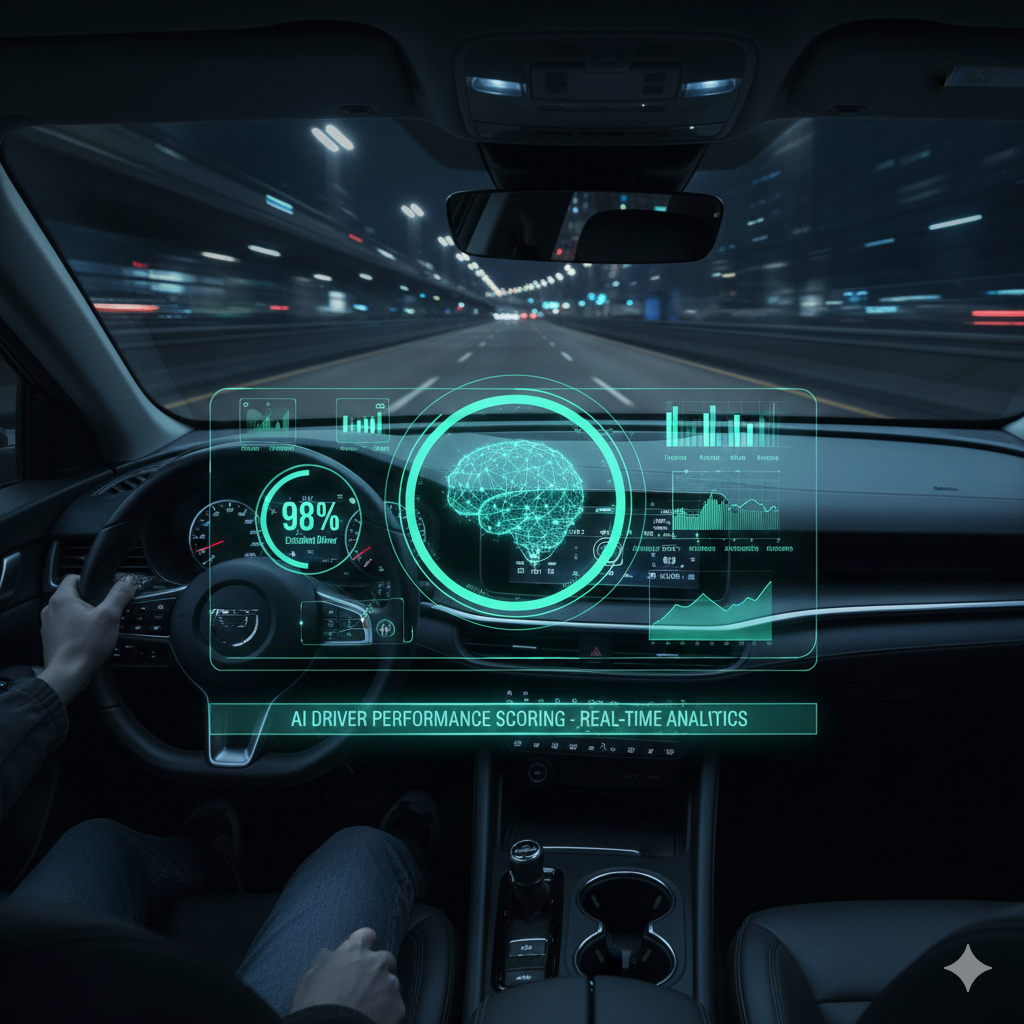
AI tracks:
- Braking patterns
- Overspeeding
- Idling time
- Fuel usage
- Driving safety
ROI:
- Improved safety
- Reduced insurance costs
- Better fuel economy
Helps logistics companies identify and train drivers effectively.
🧠 7. AI-Based Load Optimisation
AI tells you how to load a truck efficiently:
- Maximize capacity
- Reduce empty miles
- Improve centre of gravity stability
ROI:
- Lower fuel usage
- Fewer trips required
- Safer transportation
Especially critical for long-haul logistics.
💵 8. Automated Billing & Invoice Verification (AI OCR)
AI scans documents like:
- Bills of lading
- Delivery notes
- Purchase orders
- Customs papers
…and auto-generates billing.
ROI:
- Saves 100s of admin hours
- 95% reduction in manual errors
- Faster payment collection
OCR + automation = huge savings.
👁️ 9. Computer Vision for Cargo Inspection
AI cameras can detect:
- Damaged goods
- Wrong packages
- Tampered shipments
ROI:
- Reduces claims
- Identifies issues early
- Automates inspection
Used heavily in ports, warehouses, and shipping yards.
📨 10. Automated Customer Communication (AI Bots)
AI sends:
- Delivery updates
- Driver arrival alerts
- Delay notifications
- Payment reminders
ROI:
- Better customer experience
- Lower support staff costs
- Higher repeat delivery rates
Works with WhatsApp, SMS, and Email.
🚚 11. AI-Enabled Driver Assignment
AI picks the best driver for each job based on:
- Location
- Vehicle type
- Past performance
- Route familiarity
ROI:
- Faster dispatching
- More efficient operations
- Better delivery times
📦 12. Reverse Logistics Optimisation
AI reduces the headache of returns by forecasting and planning reverse shipments.
ROI:
- 15–25% cost reduction in returns
- Faster processing
- Better inventory flow
Essential for eCommerce-heavy logistics companies.
🏭 13. Multi-Warehouse Coordination
AI helps distribute stock across warehouses by analysing:
- Demand per region
- Delivery time
- Storage cost
- Order frequency
ROI:
- Lower inter-warehouse transfer cost
- Faster delivery
- Better regional planning
🔐 14. Fraud Detection & Security
AI flags suspicious activities, such as:
- Fake delivery attempts
- Duplicate invoices
- Route manipulation
- Cargo theft
ROI:
- Reduced fraud
- Safer operations
- Lower financial loss
⚡ 15. AI for Staff & Resource Planning
AI predicts:
- Workforce needs
- Shift patterns
- Peak hours
- Truck availability
ROI:
- Lower overtime cost
- Optimal manpower usage
- Faster service
🌍 Why Logistics Companies in Saudi & UAE Are Adopting AI Fast
Key drivers:
- Vision 2030 transformation
- Massive eCommerce growth
- Port expansion
- Smart city initiatives
- Rising fuel prices
- Customer expectations for tracking
- New competition
AI gives companies speed, accuracy, and cost efficiency — the three biggest needs in logistics today.
💰 How Much Does AI Cost in Logistics? (2026 Estimate)
| AI Feature | Typical Cost |
|---|---|
| Route Optimization | $10,000 – $40,000 |
| Predictive Maintenance | $20,000 – $50,000 |
| AI Tracking System | $30,000 – $70,000 |
| Warehouse Automation | $50,000 – $200,000 |
| AI Dispatching | $10,000 – $30,000 |
| OCR Billing Automation | $5,000 – $40,000 |
Costs depend on:
- Complexity
- Integrations
- Fleet size
- Warehouse size
- Features required

🧠 Why G10 Consultancy Is a Strong AI Partner for Logistics
Here is a powerful, truthful positioning based on your capabilities:
✔ 20% on-time delivery guarantee
✔ Experience delivering logistics + AI solutions
✔ Real-time tracking dashboards
✔ Driver apps + dispatching systems
✔ Warehouse & inventory apps
✔ OCR-based billing automation
✔ Route optimization integrations
✔ Admin panels + analytics dashboards
✔ Strong engineering + UI/UX talent
G10 is ideal for companies that want:
- A custom-built logistics system
- AI automation
- Predictive features
- Enterprise-grade dashboards
- Fast turnaround
📞 Ready to Automate Your Logistics Operations?
G10 can help you build an AI-powered logistics platform—fast, scalable, and built for result-driven operations.